


Periodontal Disease Treatment
Treatment Menu
Periodontal Treatment
歯科ハミール
When you hear “the number one cause of tooth loss,” many people probably think of cavities. But did you know that more adults actually lose teeth to “periodontal disease” than to cavities?
Periodontal disease is a frightening infection in which bacteria hiding in plaque cause inflammation of the gums, and if it keeps progressing, it can even dissolve the jawbone that supports the teeth. What makes it most frightening is that it has almost no easy-to-notice early symptoms such as “pain” or “sensitivity.” Because of this, many people rush to a dental clinic only once their teeth have started to feel loose — and very often it is already too late, leaving extraction as the only option.
Periodontal disease could be called a “national disease” that many Japanese adults live with. To protect your precious teeth for a lifetime, first check your current condition against the list below.
[Rule of Thumb]
・If 3 or more apply: Periodontal disease may already be starting. Early preventive care is needed.
・If 6 or more apply: Periodontal disease has likely progressed to a moderate stage. Please don’t leave it untreated — consult our Handa clinic as soon as possible.
・If all apply: There is a risk of severe periodontal disease. Immediate treatment is needed.
Check First! Periodontal Disease Self-Check
When you hear “the number one cause of tooth loss,” many people probably think of cavities. But did you know that more adults actually lose teeth to “periodontal disease” than to cavities?
Periodontal disease is a frightening infection in which bacteria hiding in plaque cause inflammation of the gums, and if it keeps progressing, it can even dissolve the jawbone that supports the teeth. What makes it most frightening is that it has almost no easy-to-notice early symptoms such as “pain” or “sensitivity.” Because of this, many people rush to a dental clinic only once their teeth have started to feel loose — and very often it is already too late, leaving extraction as the only option.
Periodontal disease is called a national disease, and it’s said that about 80% of Japanese adults have it. To protect your precious teeth for a lifetime, first check your current condition against the list below.
[Rule of Thumb]
・If 3 or more apply: Periodontal disease may already be starting. Early preventive care is needed.
・If 6 or more apply: Periodontal disease has likely progressed to a moderate stage. Please don’t leave it untreated — consult our Handa clinic as soon as possible.
・If all apply: There is a risk of severe periodontal disease. Immediate treatment is needed.
- Your mouth feels sticky and unpleasant when you wake up in the morning
- Your gums bleed a little when you brush your teeth
- Family or friends have mentioned your “bad breath,” and it bothers you too
- Your gums are red and swollen, or feel itchy
- You can’t chew hard foods like rice crackers or meat properly
- Compared with before, your gums have receded and your teeth look “longer”
- Your front teeth have started sticking out, or gaps have appeared between your teeth
- Food scraps easily get stuck between your teeth after meals
The Silent Disease Progressing Quietly in Your Mouth
Periodontal disease doesn’t suddenly get worse on any single day. The small amount of debris left behind each day turns into plaque, which then hardens into tartar and becomes a breeding ground for bacteria, slowly destroying the gums and bone over the course of several years.
Because it doesn’t hurt, people leave it untreated, and by the time they notice, the foundation supporting their teeth has already been riddled with damage, and eventually even healthy teeth fall out. It is precisely this characteristic of “progressing without any noticeable symptoms” that makes periodontal disease so feared as the silent disease of the mouth. To avoid losing your teeth, the most important thing is to find and treat it early, before it starts to hurt.

6 Risk Factors That Make Periodontal Disease Worse
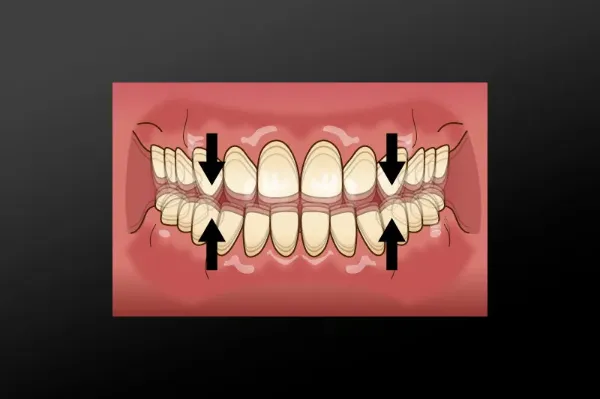
Unconscious teeth grinding or clenching
Ill-fitting crowns or old dentures

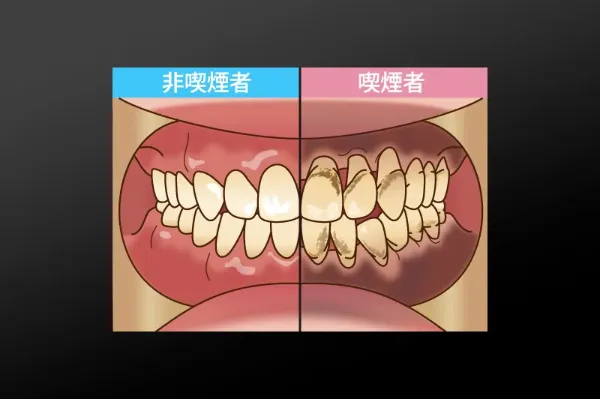
Lifestyle habits such as smoking or irregular eating
Excessive stress that lowers immunity

Systemic conditions such as diabetes or osteoporosis

Long-term use of certain medications (side effects)

Stages of Periodontal Disease Progression
[Mild Periodontitis]
Periodontal pocket: 3–5mm
The gums are red and swollen, and bleed easily every time you brush.
The bone supporting the teeth (the alveolar bone) is gradually starting to dissolve.
[Moderate Periodontitis]
Periodontal pocket: 5–7mm
Bone destruction advances further, and the teeth begin to feel loose.
The gums may discharge pus, and strong bad breath appears.
[Severe Periodontitis]
Periodontal pocket: 7mm or more
Bone loss keeps worsening, and large areas of the tooth root can become exposed.
Hard foods become difficult to chew, and as the condition worsens, the ability to support the teeth can drop significantly.
Start Today! Periodontal Disease Prevention and Countermeasures
Creating an Oral Environment That “Doesn’t Let Bacteria Multiply”
The basic principle of preventing periodontal disease is removing the bacterial mass (plaque) that causes it. In addition to caring for your teeth at home, we recommend having a professional cleaning with dedicated instruments at the dental clinic every few months.
Rethinking Your Lifestyle Habits From the Ground Up
To boost your immunity, please pay attention to a balanced diet and make sure you get enough sleep. Smoking is also one of the factors that worsens periodontal disease, so if you’d like, feel free to consult us about quitting as well.
Learning the Right Brushing Method for You
“Brushing your teeth” and “brushing them clean” are two different things. Have our dental hygienist check whether the angle and pressure of your brush are correct, and make good use of tools such as dental floss and interdental brushes.
Our Periodontal Treatment Flow
Detailed Examination and Diagnosis
We check the degree of bone loss with X-rays, and carefully measure each tooth’s periodontal pocket depth, whether it bleeds, and how loose it is, one by one, using dedicated fine instruments.
Basic Periodontal Treatment (Initial Treatment)
After teaching you the correct brushing method, we thoroughly remove tartar from the tooth surface and from just beneath the gumline using dedicated instruments (scalers). We also adjust the bite if needed.
Periodontal Surgery (For Severe Cases)
If there is a deep periodontal pocket where inflammation cannot be resolved by basic treatment alone, we open the gum slightly and, working under direct vision, reliably remove the stubborn deposits and infected tissue lodged deep inside — a surgical procedure.
Reassessing the Results of Treatment
After the course of treatment is finished, we run the initial examination again to confirm whether the gum swelling has gone down and whether the pocket depth has improved to a normal value (3mm or less).
Ongoing Maintenance
Once your gums have recovered their health, we move into a stage of regular checkups (maintenance) to keep them that way. Let’s work together with 歯科ハミール in Handa to prevent recurrence.
Advanced “Periodontal Regeneration” Menu
| Treatment | Price guide (tax included) | Features and Indications |
|---|---|---|
| Emdogain® (Periodontal Tissue Regeneration Therapy) | ¥110,000 per tooth | A special protein gel is applied to strongly promote the regeneration of bone and tissue that has already been lost. (Approved by Japan’s Ministry of Health, Labour and Welfare, MHLW) |
| GBR (Guided Bone Regeneration / Bone Grafting) Small / Large | ¥55,000 / ¥110,000 | In areas where a large amount of bone has been lost, we use safe artificial bone and a special membrane to increase bone volume. |
| CTG (Connective Tissue Graft) | ¥110,000 per tooth | Sturdy gum tissue is taken from the inside of the palate and grafted onto areas where the gum has already receded, to restore its appearance. |
| Crown Lengthening | ¥55,000 per tooth | When decay has progressed below the gumline, the gum position is lowered to secure a base for the tooth, avoiding extraction. |
| Surgical Crown Lengthening + Partial Orthodontics (MTM) | ¥110,000 per tooth | On top of the surgical procedure, partial orthodontics is used to pull the tooth upward, creating a more beautiful and reliable gumline. |
※This is a self-pay treatment item. The post-treatment support period is 1–3 years.
Addressing a “Gummy Smile”
The opposite of receding gums — the self-consciousness that comes from gums showing too much when you smile — can also be improved to a beautiful state by combining surgical treatment with orthodontic treatment.
Depending on each patient’s underlying skeletal or muscular cause, we propose the most suitable approach — such as a gum graft (CTG), adjusting the upper lip mucosa (LIP), or a botulinum toxin injection to relax muscle tension.
This is a highly specialized treatment, and many patients have happily told us, “I can smile freely without covering my mouth with my hand!”
6 Reasons Patients Choose Our Advanced Treatment
A certified periodontal specialist with expert knowledge works in close partnership with a dedicated, highly skilled dental technician.
We use dental CT to grasp the condition of the bone in three dimensions, and use a microscope and a lower-pain laser (Er:YAG) device to keep the burden on your body to a minimum.
For patients afraid of surgery, we offer “intravenous sedation,” letting you get through the surgery in a relaxed, nap-like state.
For materials such as those used to promote bone regeneration, we strictly use only genuine products certified to international quality standards.
We also check your recovery for free at 1 month, 3 months, and 6 months after surgery. There is also a post-treatment support program of up to 3 years in case anything unexpected happens.
To ease the burden of high treatment costs, we also offer support with medical expense deductions, and dental financing plans of up to 60 installments are available.
Comparing “Regenerative Treatment (Self-Pay)” With “Standard Insurance Treatment”
| Comparison Point | Periodontal Regeneration (Self-Pay) | Standard Periodontal Treatment (Insurance) |
|---|---|---|
| Recovery of Bone and Gums | ◎ (Aims to regenerate lost bone and tissue and restore them) | △ (Aims to remove deposits and stop progression) |
| Chance of Saving the Tooth | Very high (can sometimes save even a tooth you were told needed extraction) | Sometimes low, depending on how far it has progressed (extraction needed in severe cases) |
| Guide to Number of Visits | About 2–4 visits (concentrated treatment) | 4–6 visits or more (removing deposits gradually over several visits) |
| Cost Burden | Higher (not covered by health insurance) | Lower (around a few thousand yen) |
FAQ About Periodontal Disease Treatment
Q1. Can insurance be used for “Emdogain,” which regenerates bone?
We’re sorry, but treatment using regenerative materials such as Emdogain falls under “self-pay treatment” under Japan’s current insurance system. Emdogain and other such regenerative materials are themselves approved by Japan’s Ministry of Health, Labour and Welfare (MHLW). Whether it’s indicated and how much it costs varies by case, and we explain this in detail beforehand.
Q2. Just hearing that the gum will be cut for surgery makes me worried about pain and swelling afterward…
During surgery, we use thorough anesthesia, so you won’t feel pain. From when the anesthesia wears off until around the next day, you may experience some dull, throbbing pain or mild swelling, but with the pain medication we prescribe, most patients can keep the discomfort to a level that doesn’t interfere with daily life.
Q3. If I smoke, will periodontal treatment or regenerative treatment not go well?
Yes — the nicotine in cigarettes worsens blood circulation in the gums, which significantly hinders wound healing and bone regeneration. Because smoking affects blood flow and healing in the gums, we sometimes recommend quitting smoking before and after treatment.
Booking & Inquiries