


Orthodontics
Treatment Menu
Orthodontics
歯科ハミール
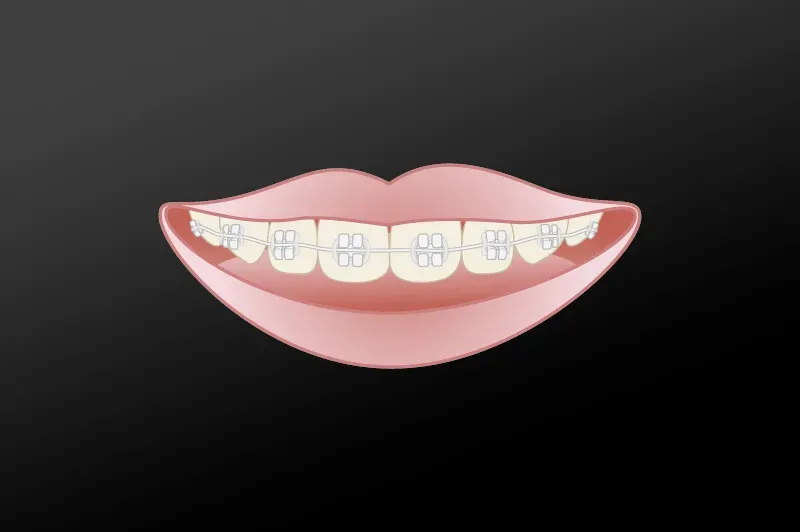
This is the orthodontic treatment with the longest history and the most proven track record: small devices called “brackets” are attached to the front of the teeth, and a wire threaded through them gradually moves the teeth. The devices are easy to see when you open your mouth, but its greatest strength is its “high versatility” — the ability to handle every kind of misalignment.
Because it allows fine three-dimensional control of each tooth in every direction, treatment plans are easier to set, and a tight, beautiful bite can be achieved in a relatively short time. It also doesn’t require you to take the device in and out yourself the way clear aligners do, so even patients who aren’t good at self-management can keep treatment on track.
For patients in Handa considering orthodontic treatment who want to “reliably correct a complex bite” or “get certain results even in cases that require extraction,” this is a highly dependable treatment method we can recommend with confidence.
Wire Braces for Steady, Reliable Improvement
“Broad Capability and a Proven Track Record”: Toward the Smile You Want
This is the orthodontic treatment with the longest history and the most proven track record: small devices called “brackets” are attached to the front of the teeth, and a wire threaded through them gradually moves the teeth. The devices are easy to see when you open your mouth, but its greatest strength is its “high versatility” — the ability to handle every kind of misalignment.
Because it allows fine three-dimensional control of each tooth in every direction, treatment plans are easier to set, and a tight, beautiful bite can be achieved in a relatively short time. It also doesn’t require you to take the device in and out yourself the way clear aligners do, so even patients who aren’t good at self-management can keep treatment on track.
For patients in Handa considering orthodontic treatment who want to “reliably correct a complex bite” or “get certain results even in cases that require extraction,” this is a highly dependable treatment method we can recommend with confidence.
Orthodontic Treatment Fee Guide
Free First Consultation
Detailed Examination & Diagnosis Fee
¥44,000
Regular Adjustment Fee (about once a month)
¥5,500
Metal Brackets (Standard)
¥770,000
Ceramic Brackets (Aesthetic)
¥825,000
Unexpected Whole-Body Effects of Misaligned Teeth
Orthodontic treatment does more than improve appearance — it is also an important form of “preventive care” that protects the health of your mouth and your whole body.
| Areas Commonly Affected | Main Risks and Possible Symptoms |
|---|---|
| Problems Inside the Mouth | Because a toothbrush has trouble reaching every area, plaque builds up, and the risk of cavities, periodontal disease, and bad breath jumps sharply. A poor bite can also trigger temporomandibular joint disorder. |
| Discomfort Throughout the Body | When food isn’t chewed enough, it puts extra strain on the stomach and intestines. An imbalanced jaw can also affect the skeleton throughout the body, and in many cases leads to chronic shoulder and neck stiffness, headaches, and poor posture. |
| Psychological Stress | Concerns about one’s smile can become a source of insecurity, making it hard to smile naturally in front of others, or difficulty pronouncing certain sounds can make someone withdraw from conversation — both of which can directly lower self-esteem. |
[Comparison Table] Wire Braces vs Invisalign (Clear Aligners)
| Comparison Point | Wire Braces (Labial) | Invisalign |
|---|---|---|
| Range of Cases That Can Be Treated | ◎ Wide range (strong with complex cases) | ○ Suited to mild–moderate cases |
| How Noticeable It Is to Others | × (Device is easy to see) | ◎ (clear, hard to notice) |
| Visit Frequency | About once a month | About once every 1.5–3 months |
| Pain as Teeth Move | More likely right after an adjustment | Generally less pain overall |
| Fee Guide (Full-Mouth Orthodontics) | Approx. ¥600,000–¥1,200,000 | Approx. ¥450,000–¥1,010,000 |
| Dietary Restrictions | Care needed with hard or sticky foods | The device comes out to eat, so almost no restrictions |
5 Advantages of Choosing Wire Braces
1. Handles the Vast Majority of Cases, Even Complex Ones
The greatest strength of wire braces is their ability to handle a wide range of situations, from mild misalignment to severe cases involving skeletal issues.
Even in cases that require extraction and major tooth movement, they can reliably pull the teeth into place with stronger force.
Even patients worried that “my bite is too complicated, it might not be fixable…” can feel reassured choosing this treatment method.
2. Millimeter-Precise 3D Control
Using the elasticity of the brackets and wire, each tooth’s tilt, rotation, and height can be finely adjusted in three dimensions.
This creates not just a good appearance, but a functional “correct bite” that can properly bite through food.
3. A Fixed Device That Needs No Self-Managed Wearing
Because the dentist bonds the device directly to your teeth, there’s no need for the self-management hassle of clear aligners, such as “wearing it more than 20 hours a day.”
You don’t need to worry about forgetting to wear it and extending the treatment period, and because steady force is applied continuously, treatment is more likely to proceed as planned.
4. Can Be Started at Any Age, From Children to Seniors
Wire braces can be used safely regardless of age — for children still growing, for adults, and for seniors alike.
Many adults hesitate, thinking “isn’t it too late to start orthodontic treatment now…”, but as long as there are no issues such as periodontal disease, a beautiful bite is achievable starting at any age.
We propose a reasonable treatment plan suited to your stage of life, without pushing you beyond what’s comfortable.
5. High Effectiveness While Keeping Costs Relatively Manageable
Wire braces (especially metal brackets), compared with clear aligners or lingual braces, have the advantage of making it easier to keep overall treatment costs down.
It strikes the best balance between “high treatment effectiveness” across a wide range of cases and “value for money,” and has remained popular from the past to today.
It suits patients well who want both “reliable results” and to “keep an eye on the budget.”
Features of the Less-Noticeable “Ceramic Brackets”
Because they use white or clear materials that blend naturally with the color of the teeth, they are a popular aesthetic option among patients who “don’t like a shiny metal look showing.”
Since they are made of plastic or ceramic, even patients with a metal allergy can continue orthodontic treatment with confidence.
Compared with metal brackets, they are slightly less strong, but we select wire of the appropriate thickness according to how your teeth are moving and take care in adjusting it.
“Partial Orthodontics” to Fix Just the “Front Teeth” You’re Concerned About
Because the range of movement needed is smaller, it’s easier to keep both the treatment period and cost down compared with full-mouth orthodontics, making it easy to get started.
It’s effective not only for closing gaps or correcting slight misalignment in the front teeth, but also as preparation to make the results of ceramic or implant treatment look more beautiful.
It’s ideal for time-limited requests such as “I want my visible front teeth to look great before an important event like a wedding or coming-of-age ceremony!”
Types of Orthodontic Treatment We Offer
Labial Braces (Front)
・Standard brackets (metal)
Silver-colored devices attached to the front of the teeth — the most standard method. It can handle every kind of bite problem and is sturdy and hard to damage. Because teeth move quickly, treatment can sometimes be shortened.
・Aesthetic brackets (ceramic, etc.)
Devices close to tooth color, white or clear, attached to the front of the teeth. This is the choice for patients who “want the reliable results of wire braces, but don’t want the metal to stand out too much.”
Lingual Braces (Back)
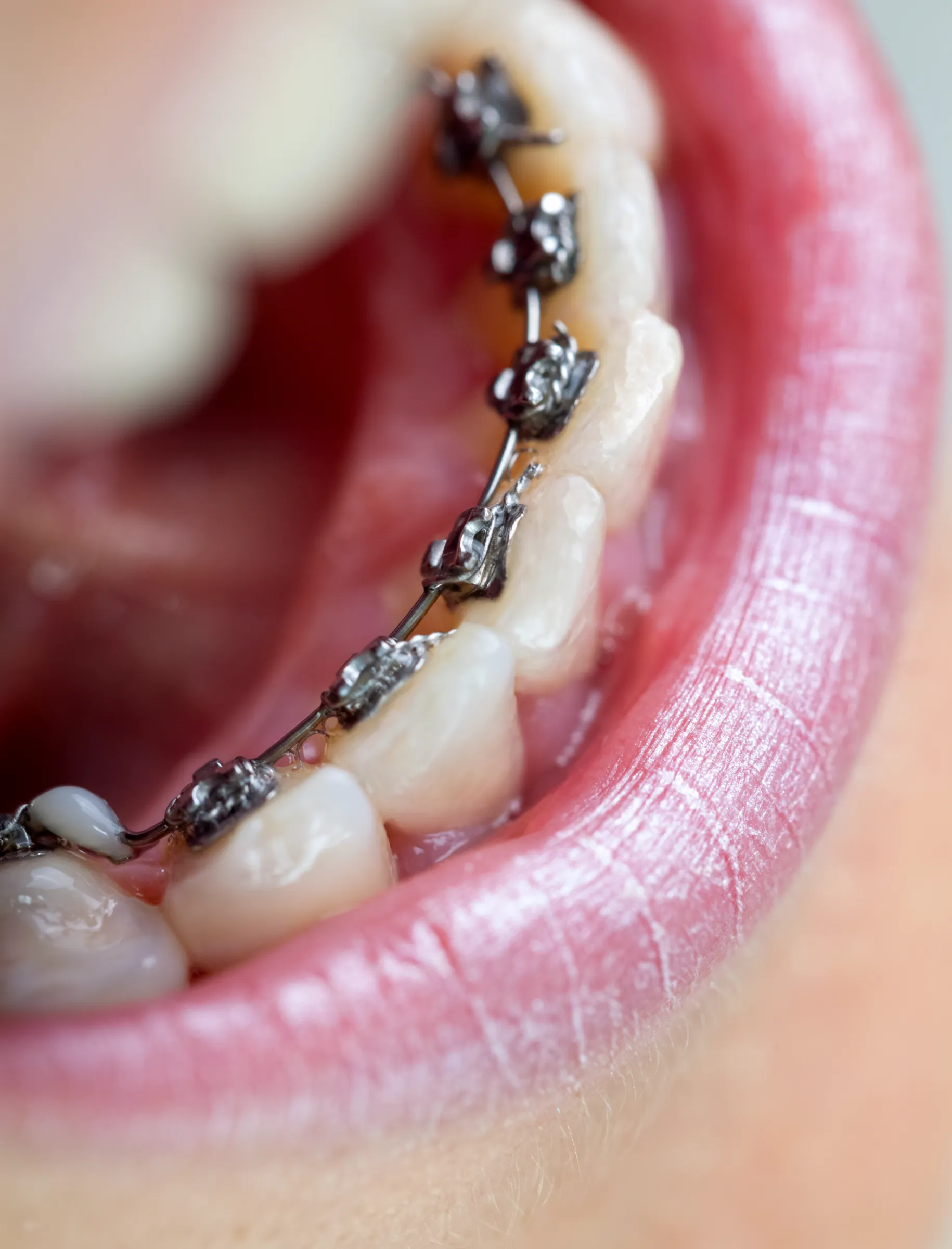
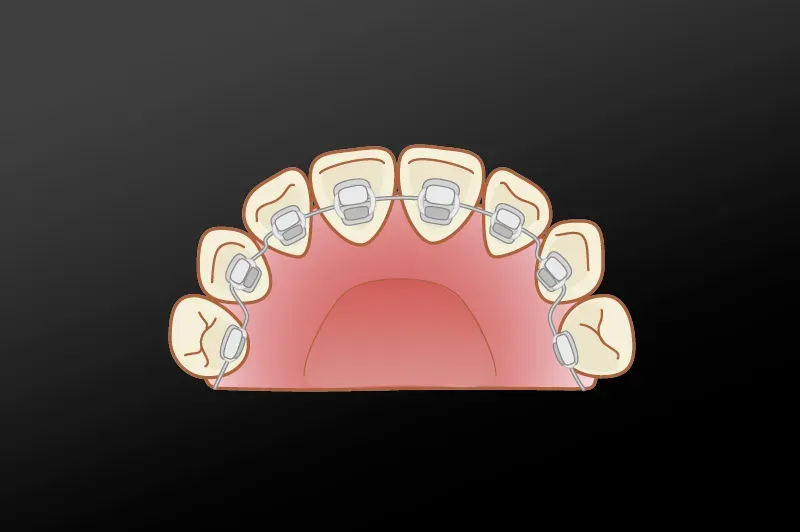
Because the device is fitted to the back of the teeth (the side the tongue touches), other people will hardly notice you’re undergoing treatment even when you open your mouth wide.
Compared with labial braces, treatment tends to take a little longer, and at first the tongue may touch the device, causing some difficulty speaking or eating, but you gradually get used to it. This option is popular with patients in service jobs and others who are often in front of people at work.
Invisalign (Clear Aligners)
This is one method of orthodontic treatment that moves the teeth using clear aligners made of a special transparent plastic.
Because the device is clear, it’s very hard to notice, and you can easily take it out yourself to eat or brush your teeth. Follow the rule of wearing it more than 20 hours a day and switch to a new aligner every 7–14 days, and you gradually get closer to your ideal bite.
Supporting Your Wish to “Fix Your Bite” at a Fair Price
Orthodontic treatment is, in principle, not covered by health insurance and falls under “self-pay treatment.” Because of this, many patients around Handa have long struggled with the worry that “I want a beautiful bite, but the cost makes it hard to decide…”
We sincerely hope to reduce, as much as possible, the number of patients who give up on treatment because of the cost barrier. That’s why, without ever compromising on quality, we work to set our prices below the general market rate, so more patients can more easily take that first step into orthodontic treatment.
To help resolve questions and concerns such as “which treatment method suits my bite?” or “can I pay in installments? how much will it cost in total?”, our first consultation is completely free. However small the question, please feel free to ask us first.
The Flow of Orthodontic Treatment at 歯科ハミール in Handa
1. Free Consultation
We take the time to ask about what concerns you about your bite, what you want from treatment, and your budget considerations. From a professional standpoint, we then explain in an easy-to-understand way which treatment methods you might consider — please feel free to book by phone or online first.
2. Detailed Examination and Bite Analysis
To reach an accurate diagnosis, we take photos of your face and the inside of your mouth, take panoramic and cephalometric (skeletal) X-rays, and take an impression of your teeth, among other steps. Based on this data, we run a detailed simulation of how the teeth should move.
3. Explaining the Diagnosis and Treatment Plan
Based on the examination results, we propose the most suitable treatment plan for you. We clearly explain what device will be used, how long it will take, and what the final cost will be, and finalize the plan only once you are genuinely satisfied with it.
4. Fitting the Orthodontic Appliance and Starting Treatment
After cleaning your mouth, we fit the orthodontic device (brackets and wire, or an aligner) according to the treatment plan. From here, we move forward together, step by step, toward a beautiful bite!
FAQ About Orthodontic Treatment
Q1. I’m worried about the “pain” of my teeth moving, and I can’t decide.
For 2–3 days after the wire is replaced or retightened, you may sometimes feel a floating-like ache in your teeth or a dull pain when biting. However, we use today’s more flexible wires to move teeth gently with lighter force, so pain is much reduced compared with orthodontic treatment in the past. If the pain is too much, we can also prescribe pain medication, so please consult us any time you feel uneasy.
Q2. About how long does treatment take?
Treatment time varies a great deal depending on how misaligned your teeth are and whether extraction is needed, but full-mouth orthodontics for adults generally takes around 1.5 to 3 years as a guide. Partial orthodontics that adjusts only the front teeth is often finished in around 6 months to 1 year.
Q3. What happens if I get a cavity during orthodontic treatment? (Can I still get teeth whitening?)
We are not a clinic specializing only in orthodontics, but a “general dental clinic” that also provides ordinary dental care, so please consult us any time you’re unsure about something. Even if a cavity develops during orthodontic treatment, we can temporarily remove the device and treat the cavity right away in-house. In addition, if you’re using clear aligners, you can also have teeth whitening done at the same time. Please feel free to ask us about anything.
Booking & Inquiries