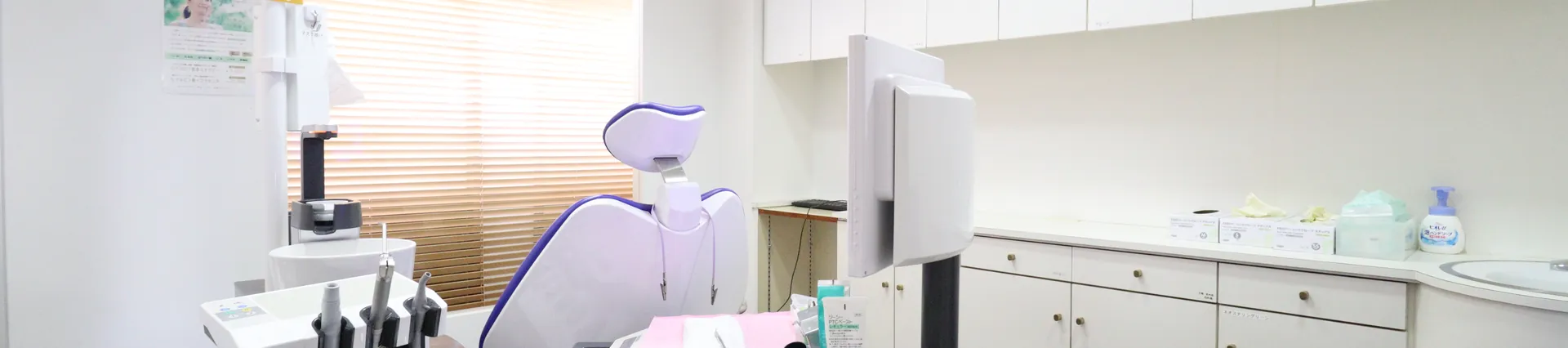
Pediatric dentistry
Treatment Menu
Pediatric Dentistry
歯科ハミール
Many people who still feel that dentists are “scary” or something to avoid, even as adults, trace it back to a sad experience in early childhood — being held down, or feeling pain, during treatment.
Pediatric dentistry at 歯科ハミール in Handa is not only about treating cavities. What matters most to us is helping children get used to the atmosphere of a dental clinic little by little, at their own pace, and build up confidence and small successes such as “it didn’t hurt at all!” and “I did it all by myself!”
Please don’t let your guard down just because “baby teeth will fall out eventually anyway.” Let’s build an environment where your child can enjoy coming to the dentist from an early age, and work together on lifelong preventive habits that protect their precious adult teeth from decay.
Pediatric dentistry that helps children say “I love the dentist!”
Many people who still feel that dentists are “scary” or something to avoid, even as adults, trace it back to a sad experience in early childhood — being held down, or feeling pain, during treatment.
Pediatric dentistry at 歯科ハミール in Handa is not only about treating cavities. What matters most to us is helping children get used to the atmosphere of a dental clinic little by little, at their own pace, and build up confidence and small successes such as “it didn’t hurt at all!” and “I did it all by myself!”
Please don’t let your guard down just because “baby teeth will fall out eventually anyway.” Let’s build an environment where your child can enjoy coming to the dentist from an early age, and work together on lifelong preventive habits that protect their precious adult teeth from decay.
Oral care tips by age, matched to each stage of growth
Around age two and a half, children often go through a strong-willed “terrible twos” phase and resist toothbrushing fiercely. If you hold your child down and force them to brush at this stage, it can leave them with a lasting dislike of brushing itself.
Try picking out a favorite character’s toothbrush together, playing fun brushing songs or videos and turning it into a “copy me” game, and keep offering patient, encouraging words. When your child manages to open their mouth, praise them, even exaggeratedly. If they cry and resist no matter what, don’t force it — stop for the moment and try again once they’re in a better mood, or respond flexibly, for example by cutting back on sweets or juice that day.
Step 1: Before the first baby tooth appears (birth to around 6 months)
This is the preparation stage before the teeth erupt, when you gently touch around and inside your baby’s mouth with clean gauze or a cotton swab so they gradually get used to the feeling of having their mouth touched.
Step 2: Once the lower baby teeth start to come in (from around 6 months)
When those cute lower front teeth start to show, it’s time for your child’s first toothbrush. At first, rather than removing plaque, the priority is to reassure them that “having a toothbrush in your mouth isn’t scary,” so try gently touching it to their teeth.
Step 3: Once the molars have come in (around age 1 to 3)
Once weaning is finished and your child starts eating a wider variety of foods, food debris easily builds up in the molars’ complex grooves and between the teeth. Make the brushing habit part of your child’s daily routine during this stage to lower the risk of cavities.
Step 4: Parents’ follow-up brushing (until around age 10)
It can be risky to relax completely just because “my child can already brush by themselves.” Even after starting elementary school, as baby teeth fall out and adult teeth come in, the mouth stays delicate and very hard to brush. To protect the precious adult teeth your child will use for a lifetime, we recommend that parents keep doing daily follow-up brushing and checks at least until around the middle to upper years of elementary school.
Protecting your child’s teeth from cavities
A child’s healthy oral environment can change a great deal through small habits and care at home.
Building the awareness and habit of “brushing on their own”
Many children only start brushing seriously after a school dental checkup uses a disclosing solution to stain the spots they missed bright red. What matters first is helping your child understand for themselves “why brushing is necessary,” in a way that encourages them to take part willingly. Check together which spots — the grooves of the molars, the backs of the teeth — are especially prone to cavities.
Choosing snacks and setting fixed snack times
If your child eats or drinks sweet things on and off over a long stretch of time, their mouth stays acidic and teeth are quickly eroded into cavities. Treat sugar-retaining snacks such as juice, chocolate, and caramel as an occasional treat for special moments, and stick to things like tea and rice crackers for everyday snacks — controlling “timing and quality” is what matters most.
Blocking “cavity-causing bacteria” as a whole family
A newborn baby’s mouth does not contain the “Mutans streptococcus” bacteria that cause cavities. In fact, this bacteria is passed on from the adults around them, through sharing spoons, mouth-to-mouth feeding, and even affectionate kisses.
The period from around 1.5 to 2.5 years of age is known as the most susceptible “window of infection.” Preventing infection during this period can dramatically lower your child’s risk of cavities later in life. The most effective way to protect your child is for the whole family to thoroughly care for their own mouths and stay clean first.
Understanding the fact that “baby teeth are more fragile”
Have you ever assumed that “children’s teeth are just as hard as adult teeth”? In fact, the enamel on baby teeth is only about half as thick as on adult teeth and is much softer, so once a cavity forms it can reach the nerve very quickly.
To protect such fragile baby teeth, it is highly effective to have high-concentration “fluoride” applied regularly at the dental clinic to strengthen the tooth structure, or to receive a preventive “fissure sealant” treatment that fills the deep grooves of the molars with resin beforehand.
Have you ever worried about your child’s “tooth alignment”?
There are two patterns in how a child’s teeth come in: one where they naturally line up neatly as the jaw grows, and another where it is better to take a professional approach from the baby-tooth stage to guide the jaw’s growth in the right direction. For the latter, starting “pediatric orthodontics” while the jawbone is still soft and growing greatly increases the chance of avoiding large-scale wire braces or tooth extraction later in life. If you have even the slightest concern about whether your child’s current tooth alignment is fine as it is, please consult a specialist first, so as not to miss the best timing for treatment.
Click here to learn more about pediatric orthodontics
Gentle cavity treatment from your child’s point of view

The basic flow of treatment is the same as for adults, but the most important part of pediatric dentistry is how we help children overcome hurdles unique to them — not being able to sit still, being afraid of instruments they can’t see going into their mouth, or not being able to keep their mouth open for long.
We never hold children down or force treatment through. We start by having them practice sitting in the treatment chair, let them actually see and touch the instruments we’ll use, and gently explain things like “this one only blows air” or “this is the little sprayer that rinses with water,” easing their fears one by one. Many children make progress that even surprises their parents — “they cried too much to be treated at another clinic, but here they sat through the whole treatment by themselves!”
Why our Handa clinic is chosen for pediatric dentistry
A “free nursery room” where children can have fun
The clinic has a play space (nursery room) staffed by dedicated childcare workers. Children can come in with the same light, happy feeling as going out to play, which helps erase any negative image of the dentist. Whether while siblings wait for their own treatment or while parents themselves are being treated, you can leave your child with us knowing they’re well looked after — which is why parents raising children give us such strong support.
Experienced staff who know how to work with children
Because we face so many children’s smiles and tears every single day, we can pick up on a child’s signs of anxiety and know how to put them at ease. Through reassuring words like “don’t be scared, let’s do our best together,” we draw out children’s own willingness to think, “I’ll open my mouth.”
A reward for effort that sparks “I want to come back!”
For children who manage to get through treatment or a checkup, our staff smile broadly and praise them with “you did such a great job!”, along with a small, happy reward. This little success becomes a huge source of confidence, leading to “I’ll do my best next time too!”
Careful explanations that help parents understand too
Caring for the child matters, of course, but we never overlook support for the parents watching anxiously nearby. We explain the current oral condition, why a particular treatment is needed, and advice for care at home, taking the time to make it clear, without technical jargon. We make sure to create a warm atmosphere where parents feel free to ask us anything, no matter how small the question.
Cost of pediatric dental treatment and medical expense subsidies
General pediatric dental treatment such as cavity treatment, fluoride application, and regular checkups is covered by health insurance, the same as for adults. (*Treatments such as orthodontics are private, out-of-pocket treatment.)
In addition, families living in Handa who hold a “Child Medical Expense Recipient Certificate” pay nothing out of pocket (fully subsidized) for insured treatment, from birth until the first March 31 after the child turns 18.
To protect your child’s precious, healthy teeth, please make full use of this program — we recommend coming in for regular preventive checkups even if there are no cavities.
Pediatric dentistry FAQ
Q1. When is the best time to start brushing guidance at the dental clinic?
Around 6 months after birth, when your baby’s cute first baby tooth (a lower front tooth) starts to come in, is the best time for a first visit. Rather than full brushing, we start with “practice getting used to having the mouth touched” and “advice for parents on the correct care method,” aiming for your child to be ready for smooth brushing by the time weaning ends.
Q2. How many times a day is ideal for a child to brush?
Ideally, “after every meal,” but demanding perfection from a young child right from the start isn’t easy and just creates stress for both parent and child. Start by building the habit of doing a good, thorough job brushing at least once, before bed, when cavity-causing bacteria multiply most easily, then gradually work up to morning and night, and eventually after every meal. There’s no need to rush — what matters is keeping it up in a way that’s enjoyable.
Q3. What is the correct follow-up brushing position that won’t hurt my child?
Having the parent sit on the floor or a sofa, with the child lying on their back with their head resting on the parent’s lap — the “lap brushing” position — gives the clearest view inside the mouth and is the safest. Hold the toothbrush lightly, as you would a pen (pen grip), guard the upper lip’s frenulum with a finger of your other hand, and brush with small, gentle movements of the bristle tips.
Q4. Which spots are especially prone to cavities and need extra attention?
They are the “grooves of the molars,” which the bristle tips struggle to reach, and the “spaces between teeth,” where teeth sit tightly against each other. Both spots are highly prone to cavities, so check them carefully during follow-up brushing, and consider using children’s dental floss where needed.
Q5. My child insists “I can brush by myself, it’s fine” — how long should follow-up brushing continue?
The early years of elementary school, when children become more independent, is exactly when they want to brush on their own — but at this stage their wrist movements aren’t skilled enough yet, and they often miss a lot of spots. It is also a complex period when baby teeth and adult teeth coexist, so to protect those precious adult teeth, we recommend that parents keep up a “final check and follow-up brushing” until around age 10 (4th grade of elementary school) if possible.
Q6. My child cries and runs away every time we brush their teeth. What should I do?
The “terrible twos” phase around age two to three is a big hurdle many mothers face. At this stage, what matters more than removing every last bit of plaque is not leaving your child with the trauma of thinking “brushing = scary, painful, getting scolded.” Try preparing a few toothbrushes with characters your child likes and letting them choose “which one today?”, or finishing quickly while singing a cheerful song — get creative, like extending a game. And once you’re done, don’t forget to praise them generously!
Q7. I’ve heard that breastfeeding for a long time makes cavities more likely, and I’m worried.
Breast milk itself is not a direct cause of cavities, but if your child has a habit of “falling asleep while breastfeeding,” sugar stays in the mouth for a long time and the risk of cavities becomes very high (bottle caries). If your child “can’t fall asleep without nursing,” try getting them more physically active during the day, for example at a park, to adjust their daily rhythm so they can fall asleep naturally, or have them drink some water or barley tea before bed to rinse out the mouth. If you’re concerned, we can also strengthen the teeth with fluoride application here — please feel free to consult us at any time.
Q8. There are lots of gaps like “spaces” between my child’s baby teeth, and it worries me.
Actually, having a certain amount of space (developmental spacing) during the baby-tooth stage is a very healthy, normal condition! Since the adult teeth that will come in next are slightly larger than baby teeth, without these spaces there wouldn’t be enough room for the adult teeth to line up, which makes crowded, crooked teeth more likely. So there’s no need to rush into orthodontic treatment just because of gaps between baby teeth. It’s the opposite case — “teeth packed in tightly with no space at all” — that calls for more attention to future tooth alignment.
Q9. The dentist suggested “nerve removal treatment” for a baby tooth — will it harm the adult tooth underneath?
Please feel free to raise any concerns with us. A baby tooth and the adult tooth waiting inside the jawbone are completely separate, independent teeth, so nerve removal on a baby tooth has almost no adverse effect on the adult tooth. On the contrary, leaving a cavity that has reached the nerve untreated, letting pus build up at the root tip, can risk discoloration or an irregular shape in the adult tooth forming underneath. That is why it is important to carry out nerve treatment appropriately when it is needed.
Q10. “The baby tooth will fall out eventually anyway,” is it fine to just leave a cavity untreated?
Absolutely not! Leaving a cavity in a baby tooth untreated causes severe pain that keeps your child from eating properly, harming their healthy growth and jaw development. What’s more, in a mouth full of cavity-causing bacteria, a newly erupted adult tooth can quickly become infected and decay too. Also, if a baby tooth crumbles and falls out too early, the neighboring teeth tilt into the gap, leaving no room for the adult tooth to come in — which can also cause serious misalignment later on. Rather than dismissing it with “it’ll fall out anyway,” please think of baby teeth as “an important guide that leads the adult teeth you’ll use for a lifetime into the right position,” and treat cavities in baby teeth properly.
Booking & Inquiries