





CASE 11
Invisalign
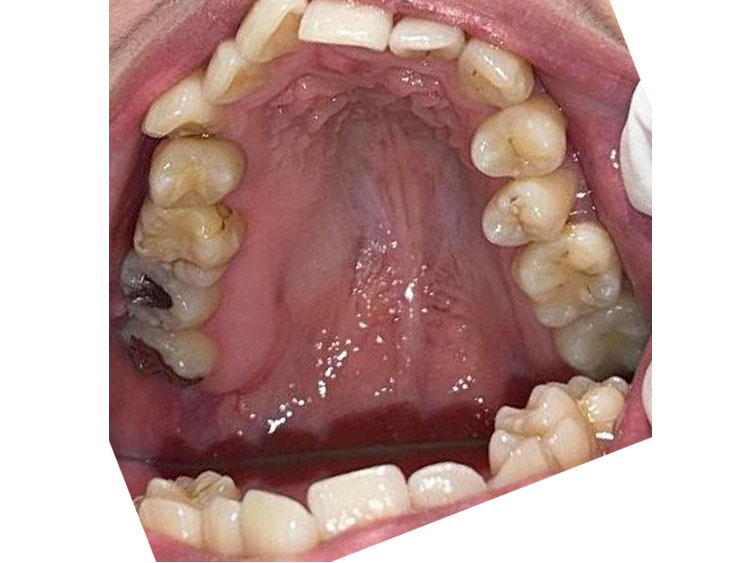 BEFORE

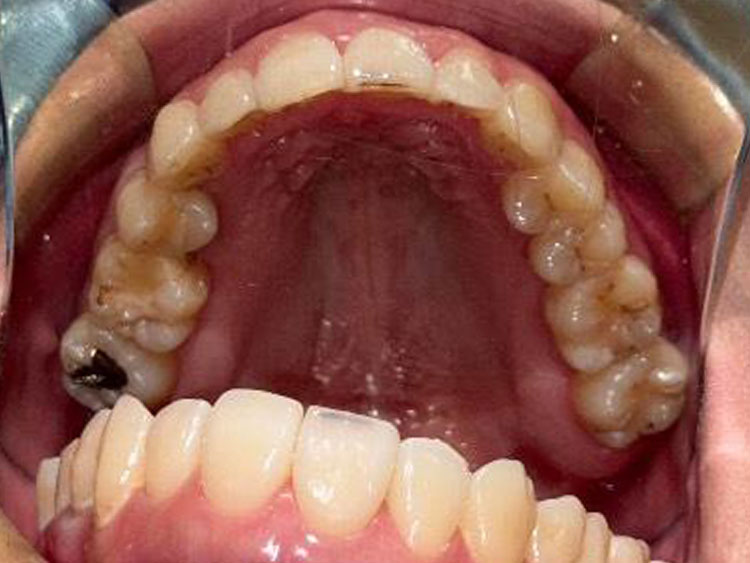 AFTER
- Treatment
- We used full-arch treatment (the Comprehensive plan) with the clear aligner appliance Invisalign. Working from the back teeth forward, we performed lateral expansion to widen the dental arch, creating space to align the teeth without extraction. We untangled the teeth that overlapped in a complicated way, moving them one by one into place, forming a functional and beautiful U-shaped arch.
- Treatment time and number of visits
- Duration: approx. 2–2.5 years Visits: once every 1.5–2 months
- Cost
- Total ¥880,000–¥1,045,000 (tax included) (breakdown: Invisalign Comprehensive package) *Because the case included high-difficulty recovery treatment, it is billed under the full-arch orthodontic treatment plan.
- Risks and side effects
- When moving teeth that overlap, gum recession or a “black triangle” (a gap between teeth) may occur. Because treatment takes place over a long period, staying motivated and strictly keeping to the required wear time (at least 20 hours a day) are key to success.
CASE 10
Invisalign
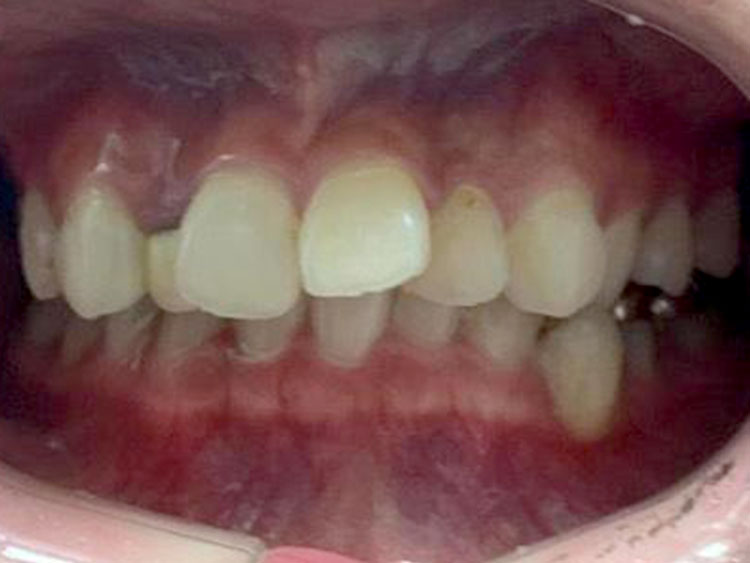 BEFORE
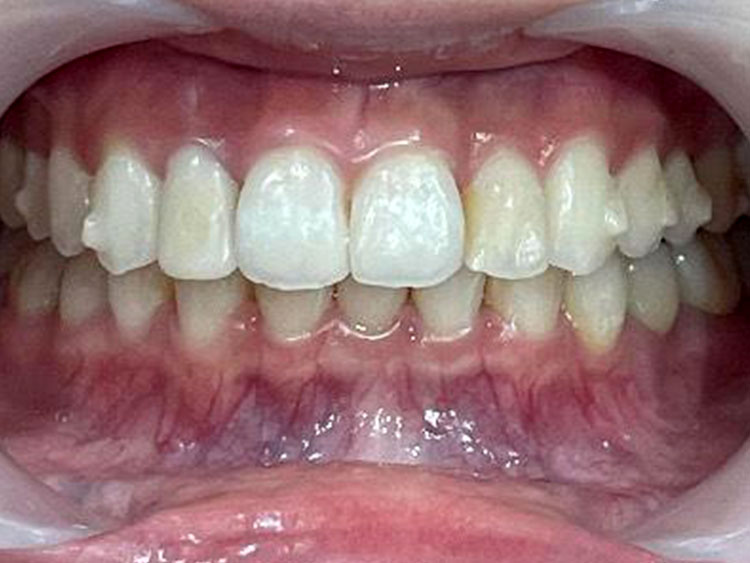 AFTER
- Treatment
- We carried out full-arch treatment using Invisalign, a clear, removable orthodontic appliance. Based on a simulation from the 3D scanner iTero, we moved the teeth little by little by exchanging a series of aligners, straightening the dental arch without extraction. *To create space for aligning the teeth, we performed IPR, a procedure that removes a very small amount of enamel from the sides of the teeth.
- Treatment time and number of visits
- Visits: once every 1.5–3 months (follow-up and handing over aligners)
- Cost
- Total ¥880,000 (tax included) (breakdown: Invisalign Standard package). *A retainer fee may be charged separately.
- Risks and side effects
- If the aligner is not worn for at least 20 hours a day, the teeth may not move as planned and the treatment period may run longer. Right after starting treatment, or when switching to a new aligner, you may feel a tightening pain or discomfort in your teeth. After treatment, wearing a retainer is required to prevent the teeth from shifting back.